BiPathCPG A Novel Load-Sharing Design Architecture for Compound Planetary Gearboxes
1Dept. of Cyber-Physical Systems, Indian Institute of Science, Bengaluru, India
2Dept. of Physics, Indian Institute of Technology Roorkee, India
*Equal contribution
Abstract
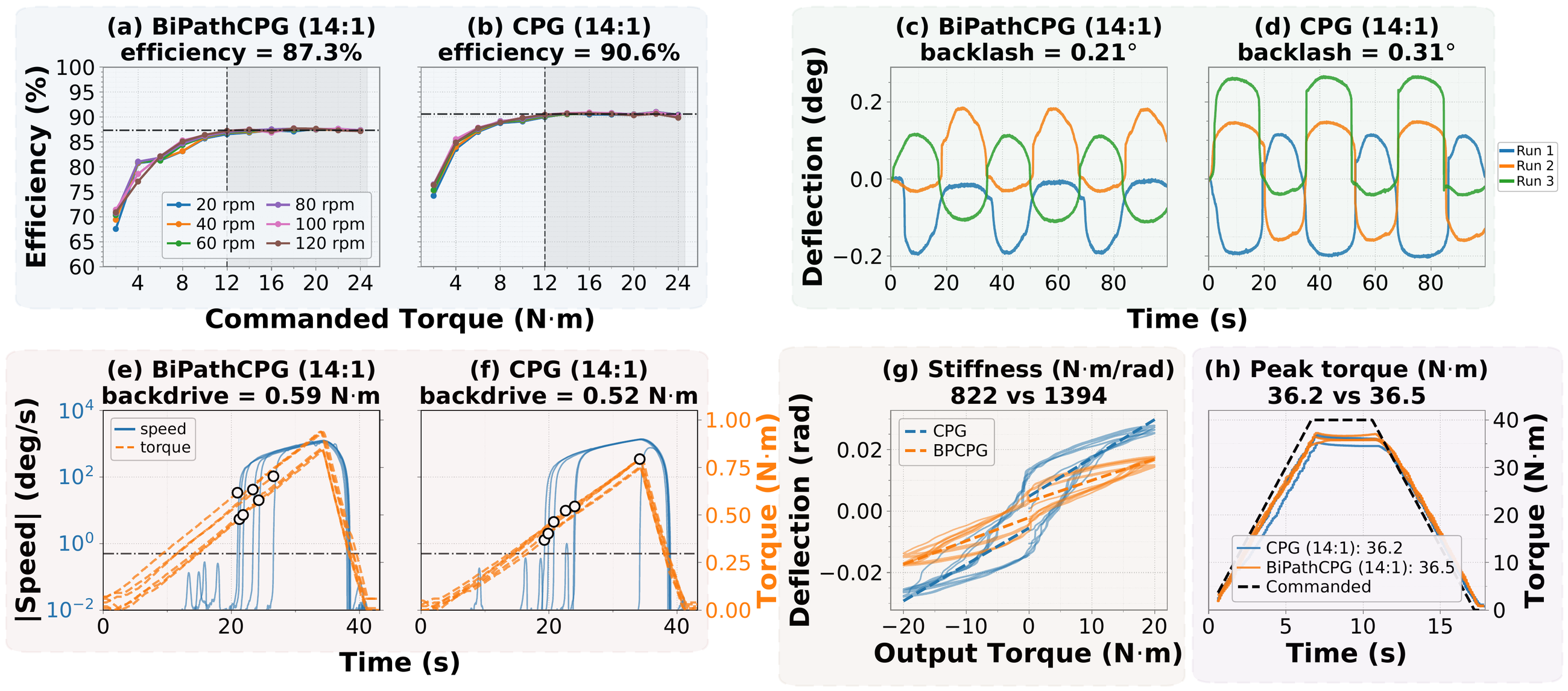
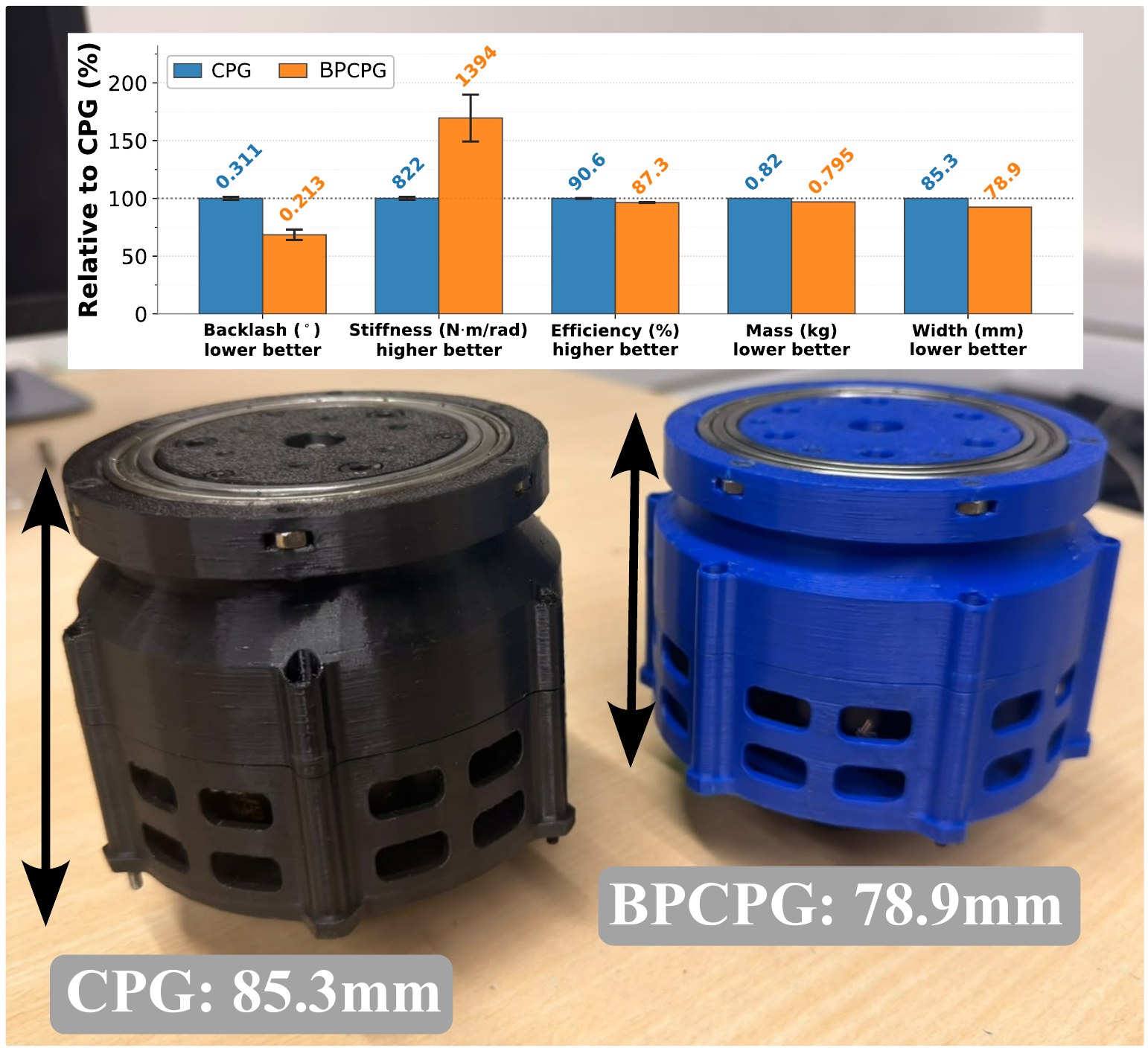
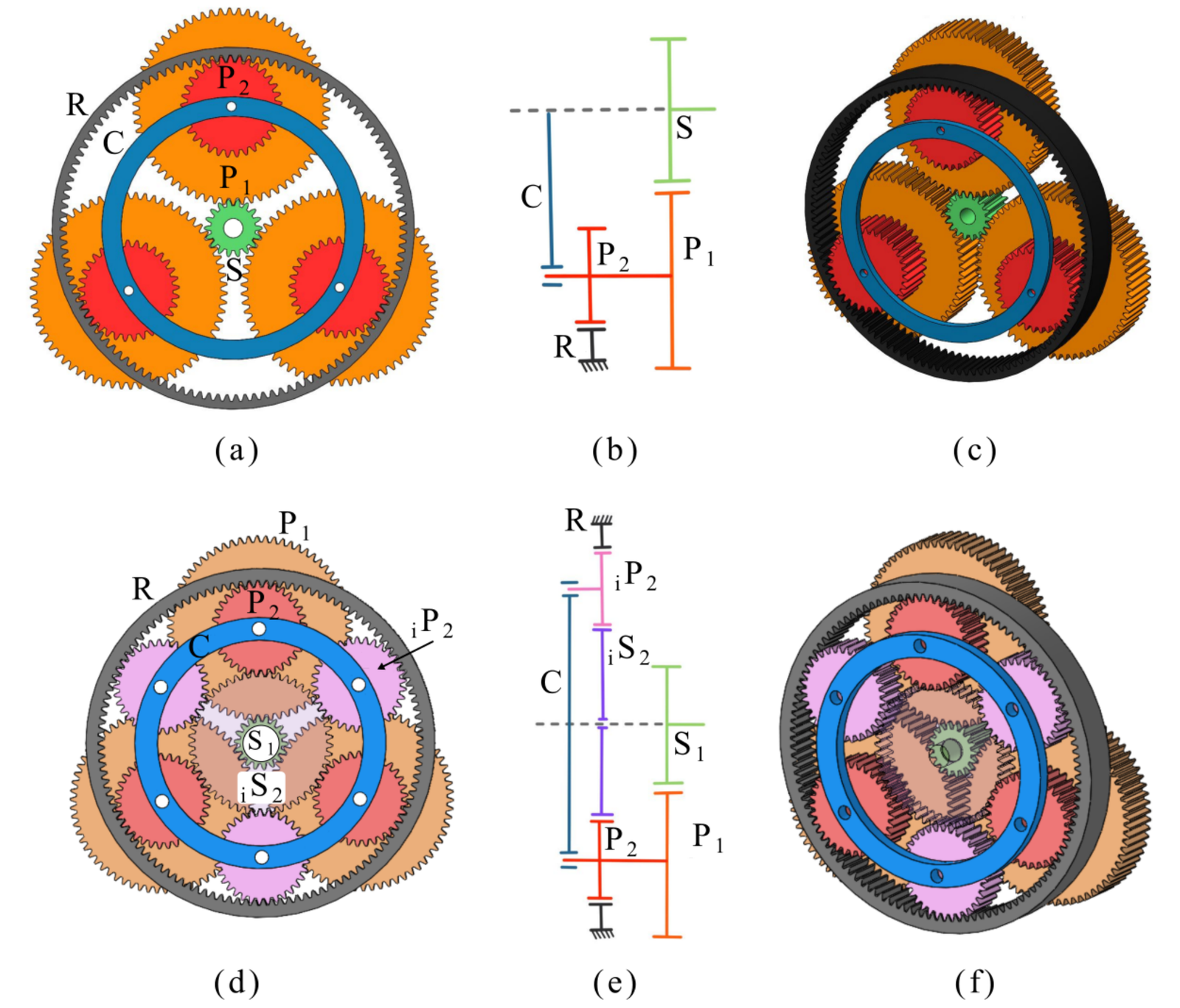
Quasi-Direct Drive (QDD) actuators are widely used in legged robots due to their low reflected inertia, high backdrivability, and high torque density, commonly employing planetary or cycloidal gearboxes. Single-stage planetary gearboxes offer high efficiency but limited torque density; multi-stage designs improve torque density at the cost of efficiency; and cycloidal gearboxes provide high stiffness but suffer from torque ripple. Compound Planetary Gearboxes (CPG) offer a compromise, but conventional designs result in increased actuator width, mass, and reduced torsional stiffness in 3D-printed actuators. This paper proposes the BiPath Compound Planetary Gearbox (BiPathCPG), a novel architecture that introduces an idle second-stage sun gear and load-sharing second-stage planets within the otherwise unused space of a conventional CPG to simultaneously improve stiffness, reduce actuator width, and reduce mass. An optimization framework computes BiPathCPG parameters for a given motor and target gear ratio. The architecture is validated through a 3D-printed proof-of-concept actuator design, benchmarked against a conventional CPG using custom-built test rigs. The BiPathCPG achieves a torsional stiffness of 1394 N·m/rad, a 1.70× improvement over the conventional CPG, with a 32% reduction in backlash, 25 g lower mass, and approximately 6.4 mm reduction in axial width, while achieving a peak stall torque of 36.49 N·m.
Interactive 3D Model
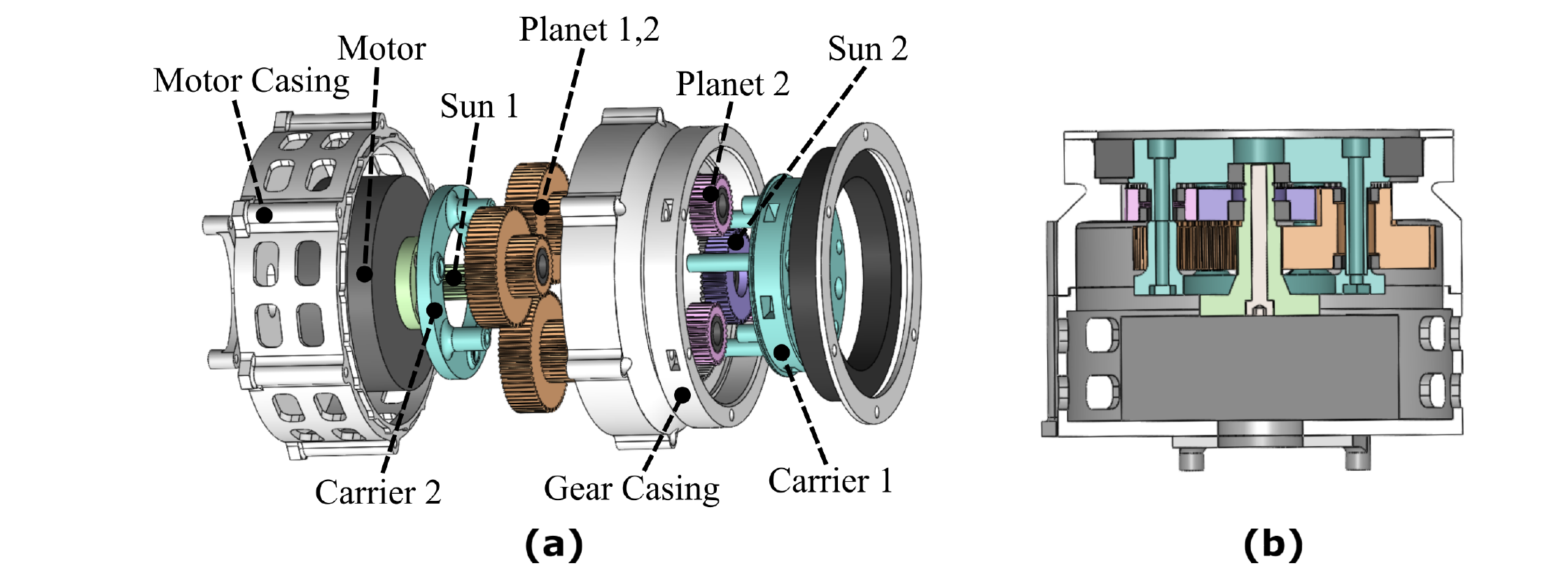
BiPathCPG actuator (i ≈ 14:1, MAD M6C12 motor). Hover over a part to see its name.
Architecture
Actuator Design
Results